Aerospace hardwareand space reliability
Build asymmetric aerospace and defense systems that make advanced sensing and resilience affordable at scale—strengthening deterrence and protecting democratic prosperity.
Sentinel
Turn a $100K thermal payload into a sensor an expendable platform can carry — bringing the cost of advanced thermal awareness down by an order of magnitude so small uncrewed systems can operate through darkness, smoke, haze, and degraded visibility.
Today's MWIR cameras depend on exotic semiconductor detector arrays, cryogenic cooling, and pixel-by-pixel bonding to a silicon readout chip. That makes them excellent — but too expensive and heavy for most small, attritable, and expendable drones. Current cooled MWIR systems run $10K–$200K per camera.
A solution-processed colloidal quantum-dot materials platform, centered on HgTe/HgSe materials research, designed to be deposited directly onto a silicon ROIC. Removing the separate detector chip and bump-bonding steps is the engineering pathway behind Sentinel's target of $1K–$5K per sensor pathway.
- Department of the Navy
- Army and Marine Corps uncrewed systems
- Air Force and Space Force sensing programs
- Counter-UAS
- Defense primes
- Emergency response
- Energy inspection
- Infrastructure security
The Department of the Navy has identified improved MWIR imaging as a strategic technology need. TASC is using that demand signal to build a larger infrared-sensing company.
Prove materials performance and the direct-on-silicon sensor architecture.
Build compact sensor modules and prove integration on uncrewed and aerospace platforms.
Transition through drone OEMs, payload integrators, and defense primes.
Scale through module supply, application-specific licensing, and dual-use sensing markets.
Radspec
The decision layer for radiation-resilient aerospace: deciding which commercial components can fly, which need more testing, and how to manage radiation risk before it becomes a mission failure.
Space systems are adopting faster, denser, commercial electronics, but radiation assurance is still built around slow, expensive, component-by-component testing. That mismatch is becoming a bottleneck for satellite constellations, defense spacecraft, high-altitude systems, and future space-compute platforms.
Radspec turns fragmented radiation evidence into an engineering decision system. It helps teams understand component risk, uncertainty, test priority, and mitigation choices across shielding, redundancy, and design margins. The model is built with NC State's nuclear engineering program, ranked 3rd nationally and top-ranked globally.
- Missile Defense Agency
- NASA
- U.S. Space Force
- Air Force Research Laboratory
- National Reconnaissance Office
- Navy strategic programs
- DOE / NNSA
- Commercial satellite manufacturers and defense primes
MDA has identified historical radiation-data analysis and predictive modeling as a strategic need for missile-defense electronics. TASC is using that demand signal to build the decision platform for radiation-resilient aerospace.
Build the radiation evidence layer and decision workflow for a focused component family.
Screening and pilot analysis for satellite manufacturers, reliability teams, and defense-space integrators.
Productized software for parts selection, risk assessment, test planning, and mitigation decisions.
Expand across component families, controlled-data environments, and aerospace programs needing persistent radiation assurance.
The people behind TASC
Operators, researchers, and engineers building the next generation of aerospace and defense systems.
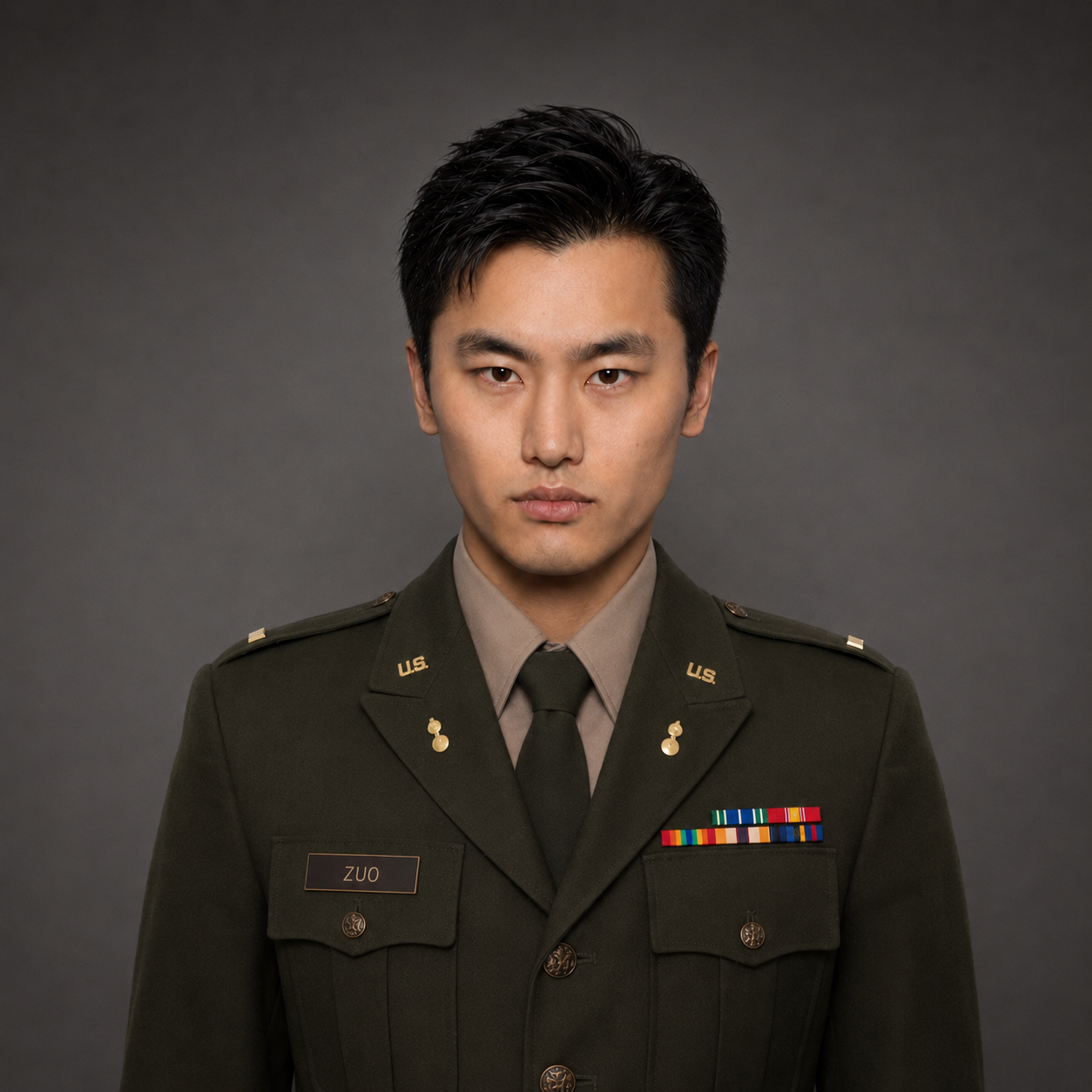



- Infrared nanomaterials leader
- Leads UCLA research on photon-resolved spectroscopy and highly emissive HgTe quantum dots — the scientific foundation for TASC's MWIR sensing pathway.
- World-class research edge
- His group reported near-unity photoluminescent performance in HgTe quantum dots in the near- and short-wave infrared, creating a differentiated starting point for the harder MWIR challenge.
- IP and commercialization path
- UCLA holds the underlying, patent-pending synthesis IP; TASC's STTR structure provides an option and first right to negotiate an exclusive commercialization license as the technology matures.
- TASC role
- Research Institution PI for TASC's submitted Navy STTR proposal on next-generation MWIR imaging.

- Radiation-resilience authority
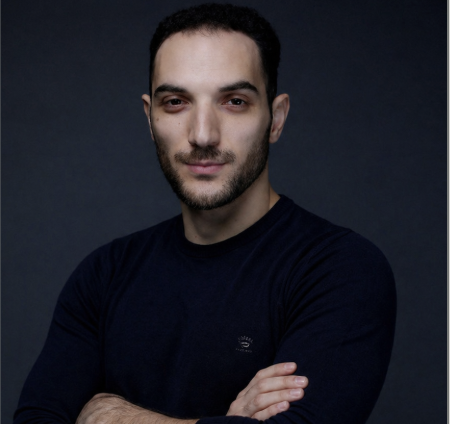
- NC State Associate Professor of Nuclear Engineering, Certified Health Physicist, licensed Professional Nuclear Engineer, and joint faculty appointee with Savannah River National Laboratory.
- Patented shielding IP
- Co-inventor of U.S. Patent 11,887,743, covering metal-oxide impregnated conformal coatings for ionizing-radiation shielding of electronics; a related manufacturing patent is pending.
- World-class technical advantage
- The NC State partnership combines radiation transport, shielding, uncertainty analysis, and electronics survivability — giving TASC a hardware-mitigation path alongside its predictive software platform.
- TASC role
- Technical research PI for TASC's MDA STTR proposal, leading the radiation-physics and shielding side of the aerospace-electronics resilience effort.
Request a briefing.
Tell us which program is relevant and what you are trying to solve. We aim to respond within one to two business days.